
Fire Damage Restoration in Mt Laurel: What Contractors Do

The flames may be out, but fire damage restoration involves more than repairing what burned. A fire damage restoration contractor in Mt. Laurel assesses fire, smoke, and related water damage, secures affected areas, and plans the work needed to restore the property. Cleaning may include vents and ducts before final restoration begins.
It’s understandable to focus first on visible damage. Smoke and water can affect areas beyond the fire’s path, so a careful assessment helps establish the full scope and document what needs attention.
This guide explains what restoration may include, how professionals assess and record damage, and what certifications can tell you about a restoration professional. You’ll also see how the process applies in Mt. Laurel, from the initial evaluation through the work needed to bring a home back to sound, usable condition.
Table of Contents
What is Fire Damage Restoration?
Mount Laurel Township estimates 47,738 residents in its July 1, 2025 population estimate. For homes and commercial buildings alike, fire restoration combines assessment, cleaning, and repair to address damage from flames, smoke, soot, and firefighting water.
Residential and Commercial Cleanup
Residential and commercial cleanup involves removing fire-related residue and repairing affected building materials. A home may need soot removed from a living room while a nearby bedroom requires odor treatment. A business may need damaged work areas cleaned before repairs can proceed. The scope depends on where heat, smoke, and water traveled, not only on what visibly burned.
Homeowners insurance coverage depends on the policy’s terms, covered property, exclusions, and deductible. The policy’s dwelling and personal-property provisions help determine which damage and belongings are covered, while documentation helps clarify the claim. A damaged wall, smoke-stained furniture, and water-affected flooring are distinct items to record and assess.
Fire, Smoke, and Soot Removal
Fire, smoke, and soot removal means cleaning residue from affected surfaces and treating smoke odor in the spaces it reached. Soot can settle beyond the room where flames were visible, including on walls, furnishings, and inside vents. Cleaning matters because residue left in place can continue to affect surfaces and leave persistent odors.
Professional cleanup generally moves from assessing affected areas to removing debris, cleaning soot, and treating odor. Fire restoration cleaning also includes cleaning vents and ducts before final restoration work proceeds. For example, a smoke-affected hallway may need surface cleaning and odor treatment, while connected ductwork needs attention to address residue carried through the system.
Cleanup Timing and Safety Risks
Restoration should begin promptly after the fire is out and the property is safe to assess. Heat and smoke damage can worsen if residue remains, while water from firefighting can affect materials over time. The sequence depends on the building’s condition: an assessment identifies affected areas, then cleanup and repairs address the documented damage.
Entering before cleanup can expose people to soot, smoke residue, standing water, and damaged building materials. A room that looks intact may still have smoke residue or water intrusion, and fire may have weakened surfaces or structural elements. Keep out of affected areas until they’re assessed and safe to enter. Avoid touching residue or moving damaged belongings before documentation.
Definition and scope of fire damage restoration
Fire damage restoration is the coordinated work of assessing a fire’s effects, securing affected areas, and returning a property to its pre-loss condition. Its scope follows the damage, not simply the room where flames were visible. For example, a kitchen fire can leave smoke residue in connected rooms, while firefighting water affects flooring below the kitchen.
The first step is understanding how heat, smoke, soot, and water moved through the building. A professional assessment distinguishes materials that can be cleaned from those requiring removal or repair. That distinction matters: a smoke-stained surface may need specialized cleaning, while a fire-weakened component may need reconstruction before the space can be restored.
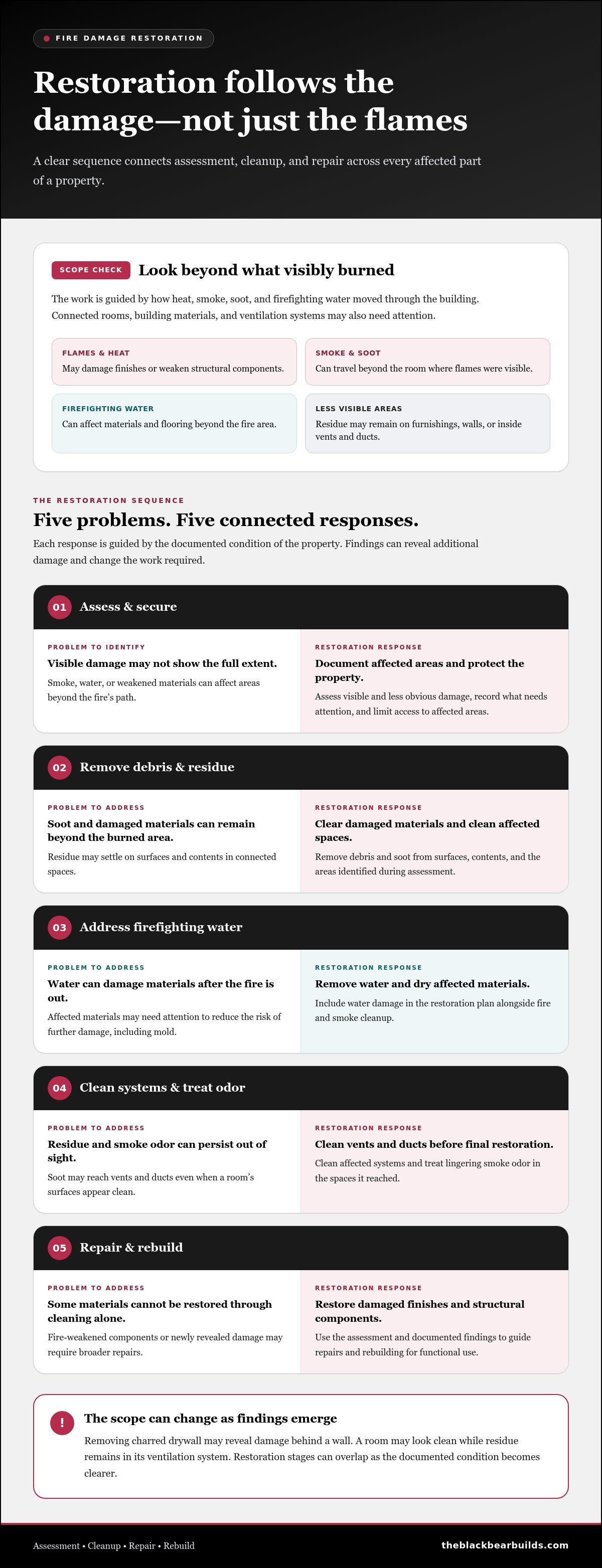
Restoration commonly proceeds through connected stages:
Assess and secure: Identify visible and less obvious damage, then protect the property and limit access to affected areas.
Remove debris and residue: Clear damaged materials and clean soot from surfaces, contents, and affected spaces.
Address water: Remove firefighting water and dry affected materials to reduce the risk of further damage, including mold.
Clean systems and treat odor: Clean vents and ducts before the final restoration step, and address lingering smoke odor.
Repair and rebuild: Restore damaged finishes and structural components so the property can return to functional use.
These stages can overlap as findings emerge. For instance, removing charred drywall may reveal damage behind the wall, changing the repair scope. Likewise, a room can appear clean while smoke residue remains in its ventilation system. Thorough restoration therefore connects cleaning with repair instead of treating them as unrelated tasks.
The work may also include separating unaffected spaces from damaged areas. Sealing off a clean bedroom from a soot-affected hallway can help limit the spread of residue during cleanup. In a commercial property, similar separation may protect offices or inventory while damaged sections receive attention. The goal is to define the affected area clearly and preserve what remains sound.
Not every fire requires the same level of construction. A contained event may primarily call for cleaning and localized repairs; damage to framing, wiring, or multiple rooms can require broader rebuilding. The assessment and documented findings guide that distinction. When the cleanup is complete and extensive repairs remain, planning for residential reconstruction with Black Bear Construction can help connect the restored structure with its intended layout and use.
Contractors continue with attention to the damage already identified and the work still needed to return the property to use. Fire restoration may include addressing water damage and preventing mold after firefighting efforts. This makes water part of the restoration scope even when flames were the visible cause of loss. The response to water damage belongs alongside cleaning and repair, rather than being treated as separate from the fire’s effects. Planning can account for both direct fire damage and the effects of firefighting, while keeping the final aim of restoring the property in view. The needed work remains guided by damage found during assessment.
Fire damage assessment and documentation
A fire damage assessment records what was affected, how damage appears to have spread, and which work is needed. The inspection considers visible charring alongside smoke residue, water intrusion, and damage to building materials. For example, a photographed ceiling stain and damp flooring can show that a room has both fire-related residue and water damage.
Can fire damage restoration contractors help with insurance claims? Yes. They can document damage, describe the restoration scope, and provide supporting records for the claim. The insurer determines coverage under the policy, so clear records help explain the observed damage without deciding the claim.
Good documentation connects each affected area to specific observations and proposed work. A room-by-room record can make it easier to distinguish fire damage from smoke or water effects. It also provides a reference if later cleaning reveals damage behind a surface, such as charred framing beneath removed drywall.
Assessment records commonly include:
Photographs: Capture affected rooms, surfaces, and belongings before debris removal or cleaning changes their condition.
Written observations: Note residue, odor, water staining, damaged finishes, and areas that need closer inspection.
Itemized contents: Describe affected belongings by type and condition, such as smoke-stained clothing or water-damaged furniture.
Work scope: Connect each proposed task to a documented condition, such as cleaning soot from a wall or replacing damaged material.
Each record should be specific enough to make the relationship between damage and work understandable. “Living room affected” offers little detail; “soot on the north wall and smoke odor in the adjacent closet” identifies locations and conditions. Photos taken from the doorway and close to the surface can show both the room context and the residue itself.
Contractors may organize this information for insurance communication, including documenting emergency work that protects the property or limits further damage. Keep copies of photographs, written findings, and relevant claim correspondence together. If cleanup uncovers another affected area, a dated update can distinguish the new finding from the original inspection.
Documentation also supports planning beyond immediate cleanup. A record showing damaged flooring, wall finishes, and built-in components helps define what must be repaired before normal use resumes. Compare the written scope with the observed areas, and make sure any difference is explained in the records. This creates a clearer path from initial inspection to completed restoration.
Repairs should remain tied to the conditions found during inspection, while belongings are recorded separately from building materials. For contents, a clear description helps distinguish one item from another when damage and valuation are reviewed. These examples show why an inventory should identify the kind of item and its condition rather than rely on a broad label. Keeping item descriptions alongside photographs and assessment notes makes the claim record easier to follow, especially when contents and structural work appear in the same room. Documentation should make clear what was observed and what was assigned a value, without treating an estimate as a coverage decision.
Fire restoration professionals and certifications
Fire restoration professionals combine damage assessment, specialized cleaning, and repair planning. Their work can involve smoke residue, firefighting water, structural materials, and detailed records. Relevant training helps explain how a professional approaches these different conditions. For example, a soot-cleaning plan and a water-damage assessment require distinct observations and work methods.
The Restoration Industry Association describes itself as a nonprofit professional trade association promoting restoration best practices through advocacy, standards, and professional qualifications. It offers in-person and on-demand education, including courses and programs that can help restoration professionals earn continuing education credits. These learning opportunities show how industry knowledge can be developed and maintained.
Certifications and professional qualifications can provide evidence of focused training, but the credential’s relevance matters. A qualification connected to fire restoration is more informative for this work than an unrelated designation. The work itself also provides context: an assessment should identify affected materials, explain the proposed cleaning approach, and connect repairs to observed damage.
Useful indicators to consider include:
Relevant education: Training in fire, smoke, or water restoration relates directly to common post-fire conditions.
Continuing education: Courses and credits can indicate ongoing learning as restoration practices develop.
Documented experience: Work examples can show familiarity with similar damage and restoration stages.
Clear explanations: A professional should be able to describe why a surface needs cleaning, removal, or repair.
Experience also gives useful context, though it should not replace clear documentation or a sound work scope. Restoration Industry Association member Christine Boak says she has more than 20 years of knowledge relating to fire restoration. That example illustrates the value of subject-specific knowledge; it does not establish that every professional has the same background or credential.
For a homeowner, the practical task is matching expertise to the property’s actual needs. Smoke residue in ductwork, water-damaged flooring, and charred framing call for different assessment and repair decisions. A professional’s qualifications are most meaningful when they align with those conditions and support a clear explanation of the work.
In Mt. Laurel, a well-defined restoration plan should connect each major task to an observed condition. For instance, photographs of soot on a wall can support a cleaning scope, while notes about a damaged structural component clarify why repair is needed. Training, experience, and precise records work together: credentials describe preparation, while the assessment shows how that preparation is applied to the property.
Fire damage restoration in Mt. Laurel
In Mount Laurel, restoration planning depends on how fire, smoke, and firefighting water affected each part of a property. Local homeowners and businesses also need clear expectations about cost, response timing, and the work that follows assessment.
Restoration Costs in Mount Laurel
Fire damage restoration cost in Mount Laurel depends on the documented damage and work required. The price depends on the case and is provided after a quote request. Key factors include the affected area, damaged materials, smoke spread, water intrusion, and the extent of cleaning and repairs.
A contained kitchen fire may require different work from a fire that affects several rooms and connected ductwork. Structural damage can add repair work, while soot on cleanable surfaces calls for a different scope. A detailed written assessment helps connect each cost factor to a specific condition, such as damaged flooring or smoke residue in a hallway.
Emergency Restoration Availability
Yes, some fire restoration companies near Mount Laurel operate 24/7 hours a day, 7 days a week. Around-the-clock availability can matter when standing water, exposed areas, or further damage need prompt attention after a fire.
Emergency response and full restoration are distinct stages. An initial visit may focus on assessing the property and limiting additional damage; cleaning, drying, and repairs follow according to documented conditions. For example, water left after firefighting may affect building materials and contribute to mold, corrosion, or other biological hazards.
In Mount Laurel, the work plan should reflect the specific building, not just the visible burn area. Smoke can reach connected rooms, and water may travel into flooring or lower levels. A team may seal off undamaged spaces from affected areas to reduce cross-contamination while cleanup proceeds. This separation can help protect belongings and surfaces that remain sound.
Fire restoration can take weeks or months because damage may involve several stages, from cleaning and drying to rebuilding affected areas. The time depends on the extent of damage, the materials involved, and what assessment reveals during the work. A clear scope helps property owners understand how emergency stabilization connects with later repairs.
For a Mount Laurel property where fire damage requires broader insured repairs, discuss emergency insurance work as part of the next construction phase. This is most relevant when the documented work extends beyond cleaning into repairs or rebuilding.
Black Bear Construction: Full Home Renovations
Black Bear Construction can help when fire-related repairs extend into a broader home renovation or structural project. Once cleanup and damage assessment establish what must be repaired, its Full Home Renovations and Additions & Structural Work can address larger rebuilding needs. For a kitchen requiring reconstruction, Luxury Seamless Flow Kitchens offer a way to rethink the room’s layout; Custom Closets and Laundry Niche can help refine other areas affected by renovation.
This is a natural next step when the work involves rebuilding or improving spaces, rather than soot cleaning or odor removal. For a conversation about renovation needs, contact Black Bear Construction.
Shape the Next Chapter of Your Home
After a fire, the next phase can involve more than returning a room to its former appearance. Once cleanup and restoration needs are understood, consider how the repaired spaces should function for everyday life. A kitchen reconstruction, for example, can be an opportunity to rethink movement and connection between rooms, while structural damage may call for a broader renovation plan.
Choosing a fire damage restoration contractor in Mt. Laurel addresses the restoration work; rebuilding goals are a separate but related decision. Black Bear Construction offers Full Home Renovations, Additions & Structural Work, and Luxury Seamless Flow Kitchens for homeowners planning that next stage. The right scope begins with the property’s condition and the changes you want the finished home to support.
If you’re ready to discuss renovation or structural work after a fire, contact Black Bear Construction. Thoughtful planning can help turn a difficult disruption into a home that feels considered, functional, and distinctly yours.
Frequently Asked Questions
Is professional cleaning necessary even for small fires?
It can be, because a small fire may leave smoke residue beyond the charred area. For example, a stovetop flare-up can leave soot on nearby cabinet faces or a lingering smell in curtains. If you see residue or notice smoke odor after the fire, an assessment can identify affected surfaces and contents. The size of the flame alone doesn’t show how far smoke traveled.
What fire damage restoration services are available in Mount Laurel?
Restoration work may involve removing fire-damaged materials, cleaning affected surfaces and contents, treating smoke odor, and repairing damaged areas. The right combination depends on the building and the spread of fire, smoke, and water. If the remaining work involves reconstruction rather than cleanup, Black Bear Construction offers emergency insurance work, full home renovations, and additions and structural work. These services address construction needs, not soot cleaning or deodorizing.
How do I choose a licensed and insured fire restoration contractor?
Look for relevant restoration qualifications, a written description of the proposed work, and clear documentation of observed damage. Licensing and insurance are also important credentials to consider. Black Bear Construction is fully licensed and insured, and its emergency insurance work can address construction needs after property damage. Compare the proposed scope with the conditions recorded at your property so the work and its purpose are clear.
How do contractors handle smoke odor and soot removal?
Contractors match cleaning methods to the affected material and residue. Soot on a hard surface, smoke odor in upholstery, and residue inside a ventilation component require different attention. Porous materials may retain odor after surface cleaning, while a smooth surface can often be assessed directly for remaining residue. A careful inspection of adjacent rooms and contents helps identify areas that a quick visual check might miss.
Does homeowners insurance cover fire damage restoration in New Jersey?
Coverage depends on the policy’s terms, covered property, exclusions, and deductible. The policy’s dwelling and personal-property provisions help determine which damage and belongings are covered, and documentation can help clarify the claim.



Comments